
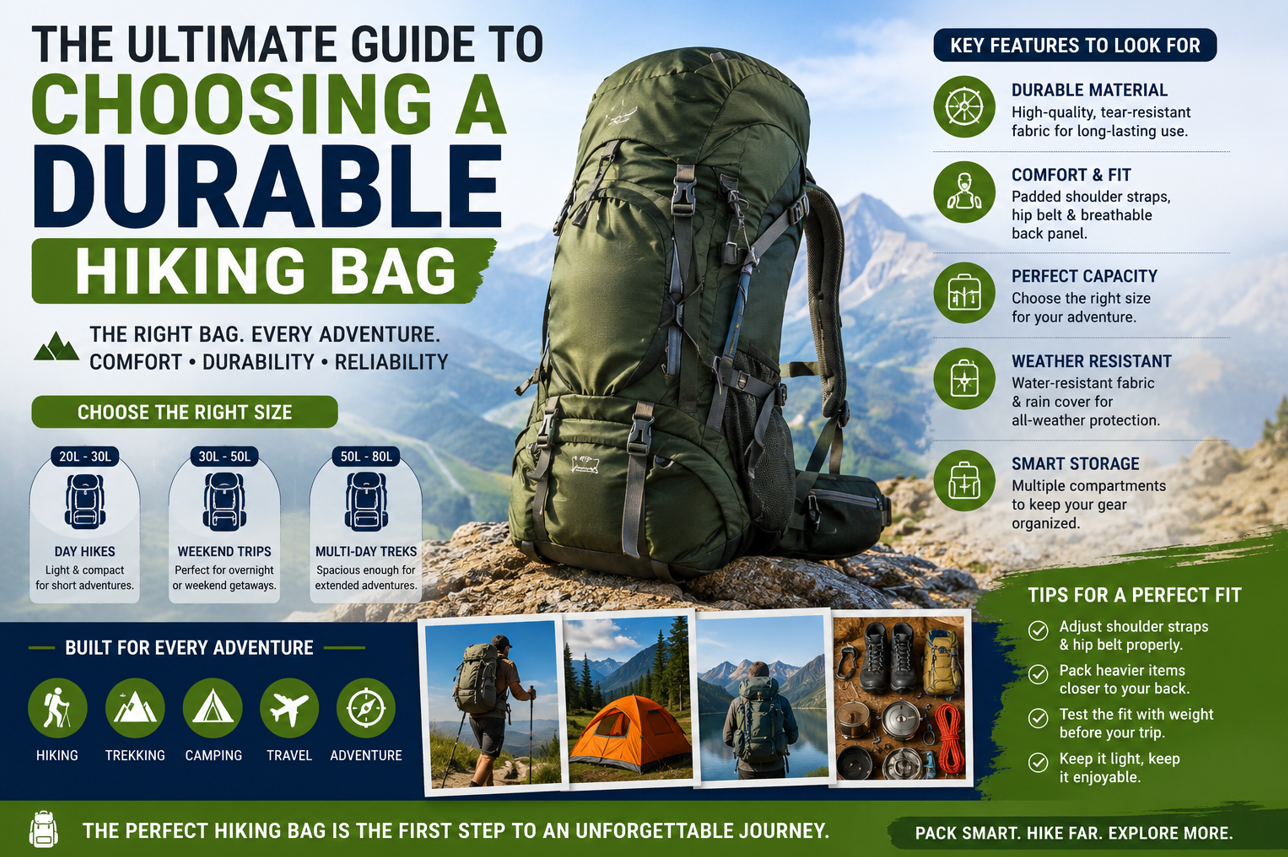
The Ultimate Guide to Choosing a Durable Hiking Bag
When planning an outdoor adventure, one of the most important decisions you’ll make is choosing the right hiking bag. A durable hiking bag is more than just a backpack — it’s your storage system, survival partner, and comfort support throughout your journey. Whether you're heading out for a short-day hike or a multi-day trekking expedition, investing in a strong and reliable bag ensures safety, convenience, and long-term value.
In this ultimate guide, we’ll walk you through everything you need to know to choose a durable hiking bag that fits your needs perfectly.
1. Why Durability Matters in a Hiking Bag
Hiking environments can be unpredictable. From rocky terrains and dense forests to unexpected rain and extreme sunlight, your bag goes through a lot. A durable hiking bag:
· Withstands rough handling and abrasion
· Protects your gear from water and dust
· Maintains shape and support under heavy loads
· Lasts for years without tearing or breaking
Choosing a low-quality bag may save money initially, but it often leads to discomfort, damaged gear, or replacement costs later.

2. Choose the Right Material
The material of your hiking bag plays a major role in durability.
✔ Nylon (Ripstop Nylon)
Lightweight yet strong
Resistant to tears
Ideal for regular hikers
✔ Polyester
Affordable and durable
Good UV resistance
Slightly heavier than nylon
✔ Cordura Fabric
Extremely tough
High resistance to abrasion
Best for heavy-duty trekking
Look for water-resistant coatings or built-in rain covers for added protection.
3. Capacity: Picking the Right Size
Choosing the right size depends on the duration of your hike:
Trip Type Recommended Capacity
Day Hike 15–30 Liters
Weekend Trip 30–50 Liters
Multi-Day Trek 50–70+ Liters
Avoid buying a bag that’s too large for short hikes — it adds unnecessary weight. At the same time, don’t choose a small bag for long trips where you need space for essentials like food, clothing, and safety gear.
4. Frame and Support System
A durable hiking bag must also provide strong structural support.
Internal Frame
Lightweight
Close-fitting design
Best for stability and balance
External Frame
Better for carrying heavy loads
Improved ventilation
Padded shoulder straps, adjustable sternum straps, and a cushioned hip belt are essential. A good hip belt transfers weight from your shoulders to your hips, reducing strain during long hikes.
5. Stitching and Zipper Quality
Many people overlook this detail — but it’s critical.
Check for reinforced stitching at stress points
Double stitching increases longevity
Heavy-duty zippers (like YKK type) last longer
Smooth zipper movement prevents sudden breakage
A strong bag isn’t only about thick fabric — the stitching and hardware matter just as much.
6. Weather Resistance Features
Outdoor conditions can change quickly. Your hiking bag should offer:
Water-resistant outer layer
Rain cover compartment
Waterproof base material
Sealed or covered zippers
If you frequently hike in rainy or humid regions, these features are essential.
7. Comfort for Long-Term Use
Durability doesn’t mean heavy and uncomfortable. A well-designed hiking bag should include:
Breathable back panel
Ventilation channels
Adjustable torso length
Compression straps for load stability
Comfort and durability go hand in hand. Even the strongest bag becomes useless if it causes back pain or shoulder strain.
8. Smart Compartments and Accessibility
A durable hiking bag should also be practical. Look for:
Multiple compartments
Side mesh pockets for water bottles
Bottom compartment for sleeping bag
Quick-access top pocket
Hydration bladder compatibility
Easy organization reduces stress during hikes and improves overall efficiency.
9. Weight of the Bag Itself
Heavy-duty doesn’t mean overly heavy. Modern durable hiking bags use advanced materials to stay strong while remaining lightweight.
Always check:
Empty weight of the bag
Load capacity rating
Material density
Balance strength with weight for the best performance.
10. Brand Reputation and Warranty
Trusted outdoor brands usually test their bags under extreme conditions. While price may be slightly higher, you often get:
Better craftsmanship
Warranty coverage
Reliable customer support#
Proven durability
Always check customer reviews before purchasing.
Final Thoughts
Choosing a durable hiking bag is an investment in your outdoor experience. The right bag protects your gear, supports your body, and enhances comfort on every trail. Focus on strong materials, quality stitching, proper support systems, and weather resistance when making your decision.<!--[endif]-->