
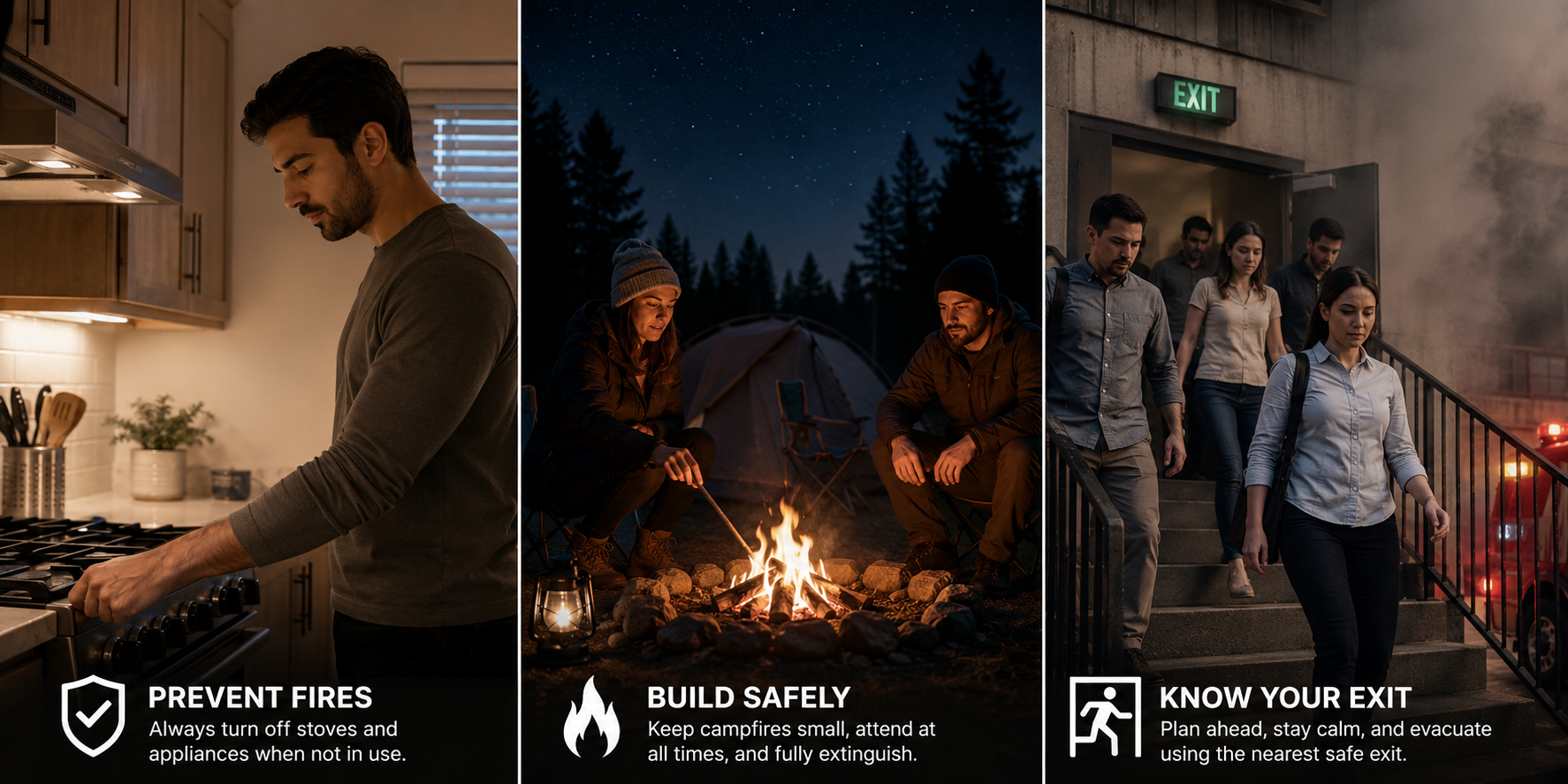
Fire Safety Awareness Guide: How to Stay Safe at Home, Outdoors, and During Emergencies
Fire is one of the most powerful and fast-moving hazards in everyday life. It can start unexpectedly, spread quickly, and create dangerous situations within minutes. Whether at home, in outdoor environments, or during travel, understanding fire safety awareness is essential for protecting yourself and others.
Fire safety is not about fear—it is about preparation, prevention, and knowing how to respond calmly when every second matters. This guide will help you understand how fires start, how to prevent them, and what actions can save lives during emergencies.
What Is Fire Safety Awareness?
Fire safety awareness is the ability to recognize fire risks, prevent ignition sources, and respond effectively in case of fire emergencies. It involves understanding how fire behaves and taking proactive steps to reduce danger.
A fire-aware person:
- Identifies fire hazards early
- Prevents unsafe conditions
- Knows emergency escape routes
- Reacts calmly during fire incidents
- Protects others during emergencies
The goal is simple: reduce risk before fire starts and act fast if it does.
Why Fire Safety Awareness Is Important
Fire incidents can escalate within seconds. Many accidents happen due to small mistakes like unattended cooking, faulty wiring, or careless outdoor burning.
Fire safety awareness helps you:
- Prevent household fires
- React quickly during emergencies
- Reduce property damage
- Save lives in critical situations
- Stay prepared in public places and outdoors
Preparedness is the key difference between control and chaos.
Common Causes of Fire
Home Fire Risks
Most fires start inside homes due to preventable issues.
Common causes include:
- Unattended cooking
- Electrical short circuits
- Overloaded power sockets
- Gas leaks or unsafe cylinder use
- Candles or open flames left unattended
Outdoor Fire Risks
Outdoor fires often occur in natural or camping environments.
Examples:
- Uncontrolled campfires
- Dry vegetation ignition
- Cigarettes not properly extinguished
- Barbecue fire negligence
- Hot weather conditions increasing fire spread
Electrical Fire Hazards
Electrical faults are one of the leading causes of fire accidents.
Warning signs:
- Burning smell from outlets
- Flickering lights
- Overheated plugs or wires
- Damaged cables

How to Prevent Fires
Practice Kitchen Safety
The kitchen is one of the most common fire-starting areas.
Safety tips:
- Never leave cooking unattended
- Keep flammable items away from stove
- Turn off gas and appliances after use
- Keep a fire extinguisher nearby
Maintain Electrical Safety
Electrical fire prevention is critical in modern homes.
Best practices:
- Do not overload sockets
- Replace damaged wiring immediately
- Use certified electrical equipment
- Avoid using multiple high-power devices in one outlet

Safe Outdoor Fire Practices
When outdoors or camping:
- Build fires in designated areas only
- Keep water or sand nearby
- Never leave fire unattended
- Fully extinguish before leaving
What to Do During a Fire Emergency
Stay Calm and Act Fast
Panic can slow your response time. Focus on clear actions.
Evacuate Immediately
- Leave the building quickly
- Do not collect personal items
- Follow nearest exit routes
- Stay low if smoke is present
Avoid Smoke Inhalation
Smoke is often more dangerous than flames.
- Cover nose and mouth with cloth
- Stay close to the ground
- Move toward fresh air quickly
Call Emergency Services
Once safe:
- Alert authorities immediately
- Provide clear location details
- Warn others if possible
Fire Safety at Home
Home fire prevention is the most important step in safety awareness.
Key habits:
- Install smoke alarms
- Keep fire extinguishers accessible
- Avoid leaving candles unattended
- Teach family members emergency exits
Fire Safety in Public Places
In public environments:
- Identify exits when entering buildings
- Avoid using elevators during fire alarms
- Follow emergency instructions
- Stay calm in crowded evacuations
Fire Safety Outdoors and Camping
Outdoor fire safety requires discipline.
Important rules:
- Never leave campfires unattended
- Avoid fire during strong winds
- Clear dry grass around fire area
- Always extinguish completely
Teaching Fire Safety Awareness
For families and beginners:
- Practice fire drills at home
- Teach children emergency exits
- Explain dangers of playing with fire
- Encourage safe habits early
Final Thoughts
Fire safety awareness is a life-saving skill that everyone should develop. Most fire incidents are preventable with the right habits, attention, and preparedness.
By staying alert, following safety practices, and reacting calmly during emergencies, you can significantly reduce risk and protect yourself and others in any environment.
Preparedness is not optional—it is essential for survival and safety
<!-- [if !supportLineBreakNewLine]-->
<!--[endif]-->